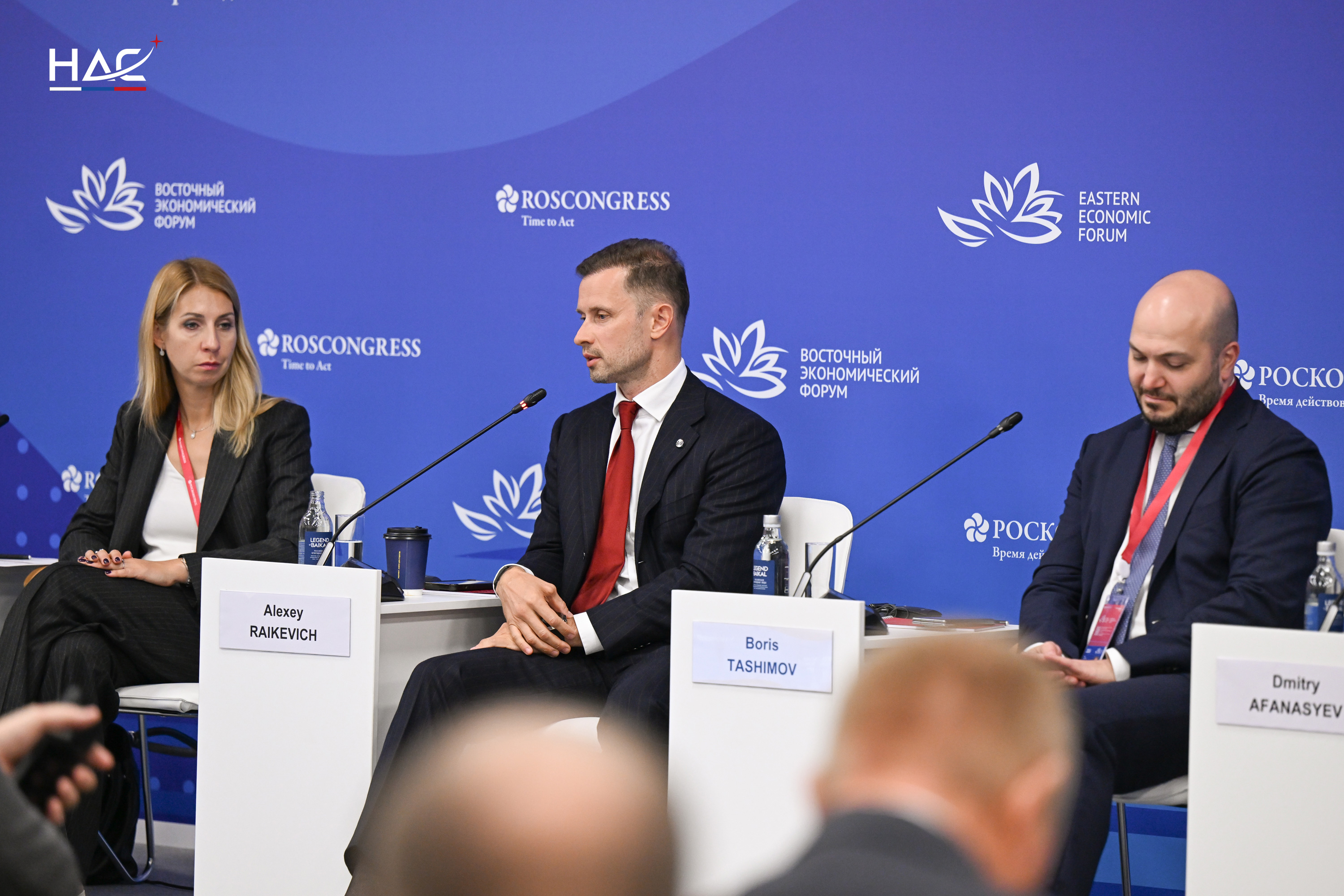
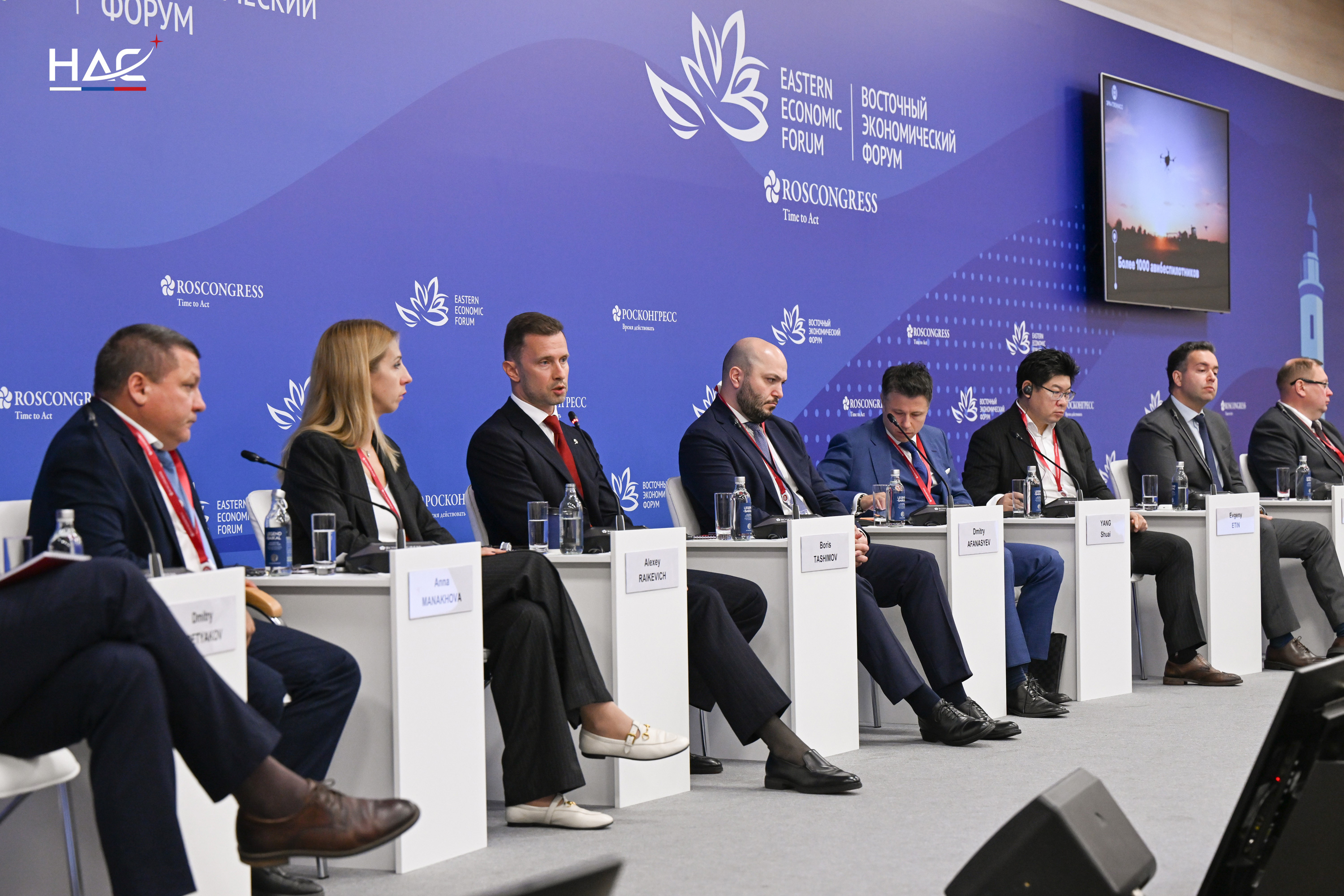
The main news of the session was the start of a pilot project announced by Russia’s Ministry of Transport, which will bring market participants together to move from test flights to the industrial operation of civil unmanned aviation.
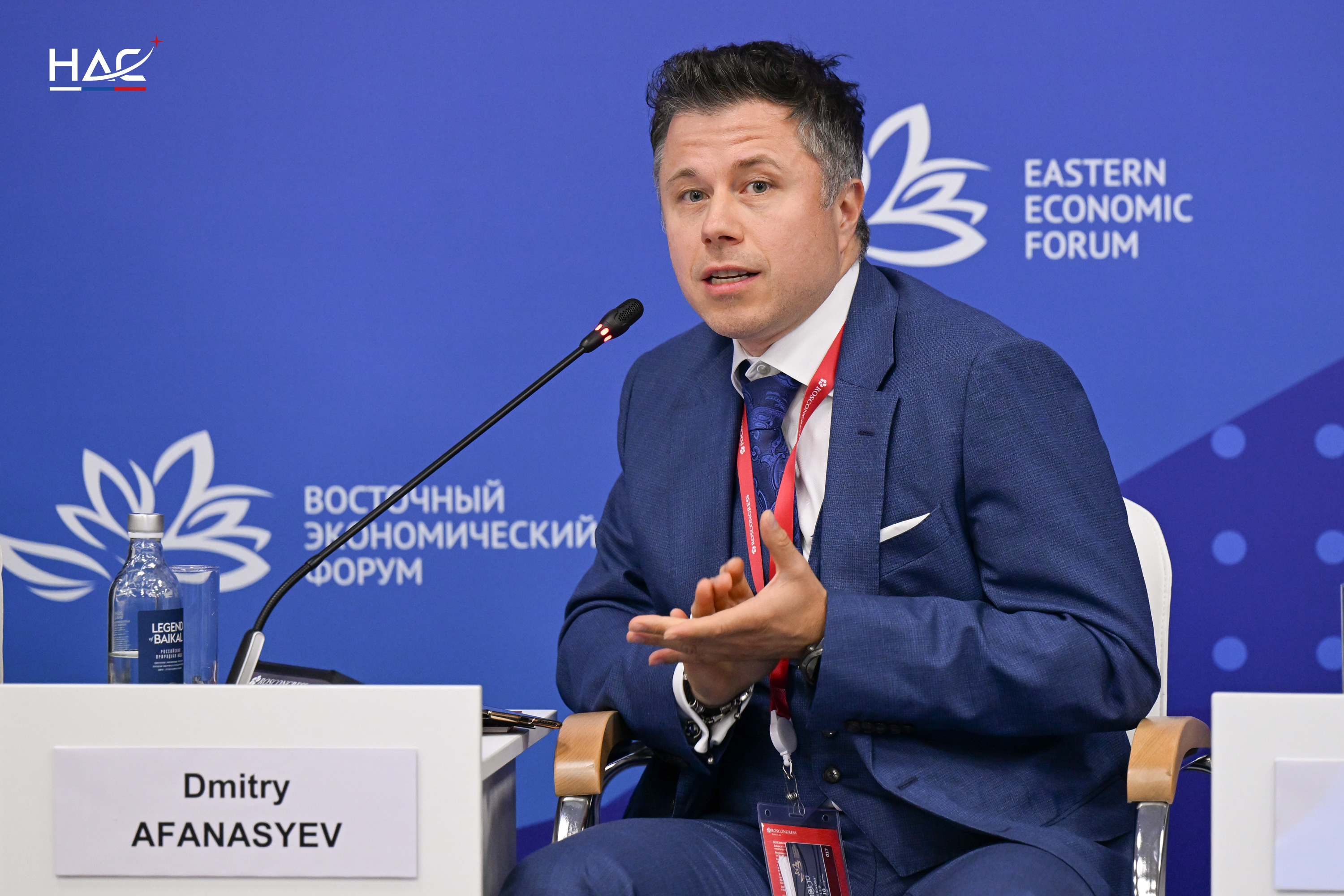
The discussion involved representatives of government bodies, manufacturers, unmanned transport operators and research institutes. The autonomous systems industry was represented by Dmitry Afanasyev, Chairman of the Board of the NAS Association, and Anna Manakhova, Director of the Association.
The position of the NAS Association
Dmitry Afanasyev, Chairman of the Board of the NAS Association:
The low-altitude economy is an integral part of the national strategy for developing autonomous systems, and it covers not only unmanned aircraft but autonomous systems operating in every environment — in the air, on the ground, on and under water, and in future in space.
What is being built is a single autonomous systems industry that includes technology, manufacturing, infrastructure, regulation, skills and the widespread adoption of autonomous solutions across the economy.
The low-altitude economy project answers a key question: how to ensure not only that unmanned aircraft systems can be used technically, but that operating them is economically efficient and profitable.
The experience of the pilot project will become the basis for further scaling. Members of the Association have unique experience of running experimental legal regimes that make it possible to try out individual technologies in every environment.
Anna Manakhova, Director of the NAS Association:
The main task of the project is to move from isolated experiments to industrial operation. What matters is not individual flights but the service as a whole: what the real demand is, which route is used, whether the infrastructure is ready.
The project should deliver sustainable logistics on selected routes, a calculated business case, a tested digital framework and clear mechanisms for cooperation.
Above all, it should produce a practically proven model for using unmanned aircraft systems, with clear economics and the ability to reproduce it elsewhere. That result will make it possible to share the experience and scale the project up faster.
About the competition
The session also discussed the competition launched by Russia’s Ministry of Transport to select a region for the pilot low-altitude economy project. The project will bring together all participants in the unmanned transport market and make it possible to move from experiments to the industrial operation of civil unmanned aviation.
The NAS Association will take an active part in delivering the project.
Building the low-altitude economy is a necessary part of the national strategy. The key question the project answers is how to make unmanned aircraft systems economically efficient. Technically the systems are already capable of the work; what matters is that this project should prove commercially sound and reproducible in practice.