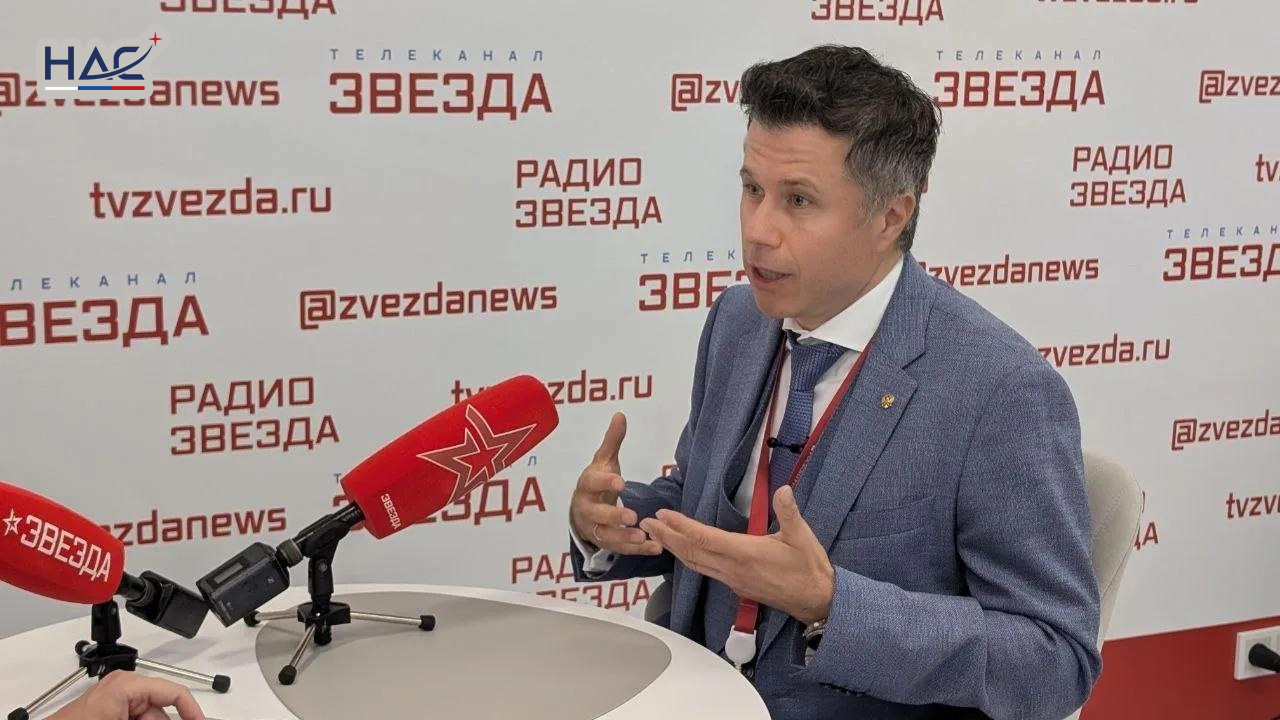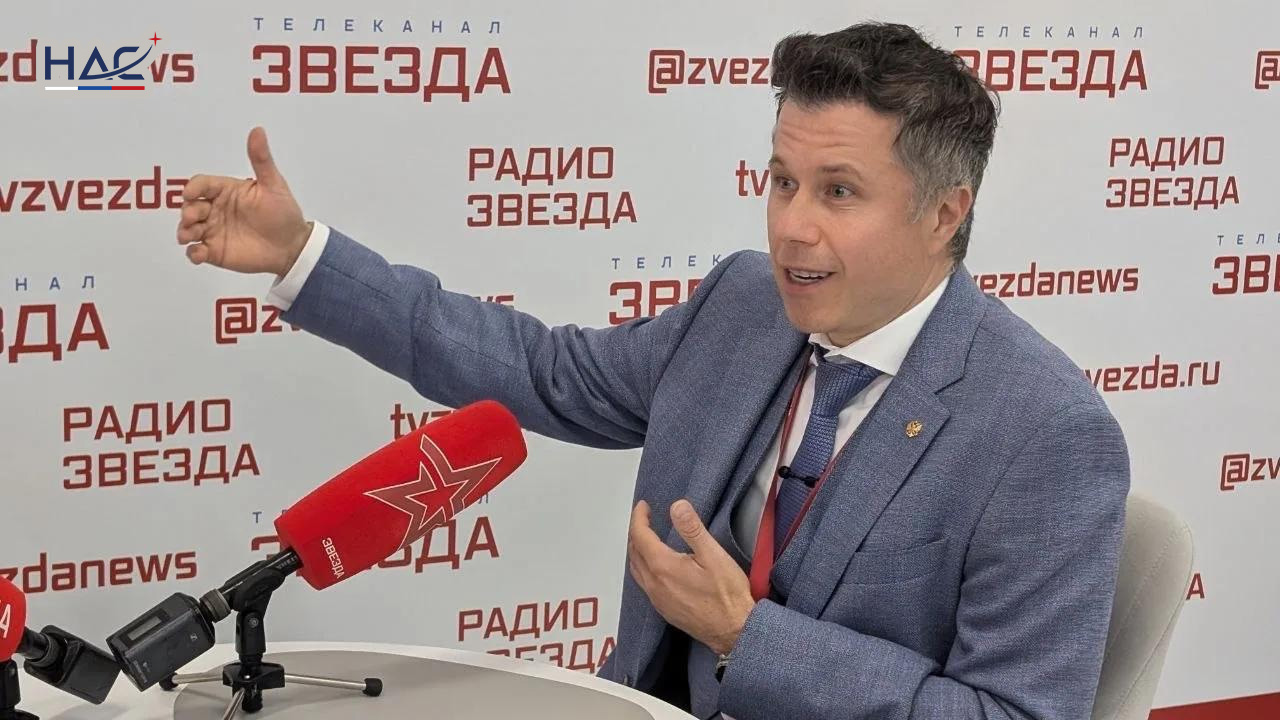

Speaking with Anna Shafran, he set out real cases of autonomous systems in use in the Far East, the path to technological sovereignty, and the launch of the competition to build the low-altitude economy.
The full video of the interview is available on Zvezda’s official website (https://tvzvezda.ru/news/202693148-s3NPo.html)
The Far East as a proving ground for breakthrough solutions
Dmitry Afanasyev stressed that the Far East already demonstrates the practical applicability of autonomous systems. Among the clearest examples he cited:
• Unmanned delivery on Sakhalin: for the first time in Russia, an unmanned aircraft flew more than 400 km to deliver medicines and freight to remote settlements, cutting waiting times from weeks to a few hours.
• Uncrewed surface boats: trials of freight drones for logistics to the Kuril Islands — particularly relevant given the vast length of the coastline.
• Monitoring in energy and environmental protection: round-the-clock surveillance of pipelines and oil and gas fields, as well as tracking floods and ice conditions along the Northern Sea Route, which makes it possible to prevent environmental disasters and reduce their consequences to almost nothing.
“Applicability has already been proven. Now it needs to be scaled up — not only across the regions of the Far East, but across the whole country,” he said.
Technological sovereignty: from assembly to domestic manufacturing
Asked about dependence on imported components, Dmitry Afanasyev said the industry had made “an enormous leap forward”. Over the past year the number of plants in Russia producing components for autonomous systems has grown several times over.
“There are now lists of Russian components with 100% localisation. Using them, any autonomous system can be built in our country without relying on international supplies,” he said, adding that Russian technology is already regarded as world-leading and opens the way to the global market.
The low-altitude economy: a new growth driver
He closed the interview by commenting on the forum’s key event — the launch by Russia’s Ministry of Transport of a competition to build the low-altitude economy.
“For the first time in our country’s history, autonomous systems can be used commercially for delivery. They gain not only a route, but the chance to scale up to an entire region and then to the whole country,” he stressed.
In his view, over the next 5 to 10 years the low-altitude economy will become one of the main drivers of economic growth both in Russia and worldwide.
Watch the full interview on the website of the Zvezda media holding — https://tvzvezda.ru/news/202693148-s3NPo.html.