The industry’s main challenge
Today Russia has created competitive technologies for autonomous transport and autonomous systems: driverless cars, drones, robotic platforms. Many of them have successfully passed trials and proven their effectiveness. But most remain pilot projects and do not reach the mass market.
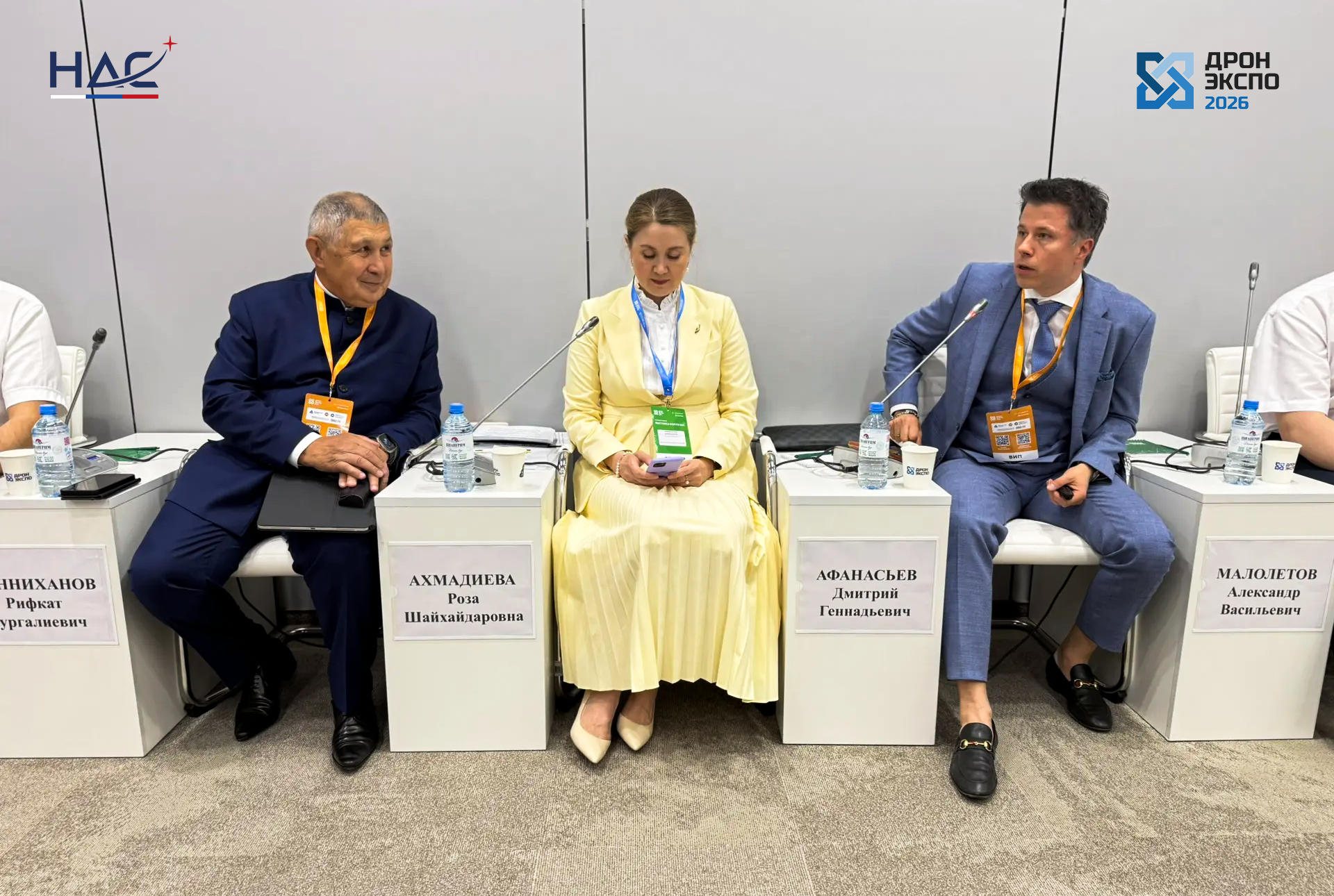
“Industry associations are the mechanism that turns technological developments into a working market — with rules, trust, customers and scaling,” Dmitry Afanasyev formulated the main idea of his address.
________________________________________
Five tasks for industry associations
The Chairman of the Board of NAS outlined five key areas of work that help the industry move from pilots to mass adoption:
Consolidating the industry’s position. Developers, operators, customers and regulators often speak different languages. The association becomes a platform for developing a common position and shared priorities.
Participating in shaping regulation. Effective laws and standards are created through dialogue between the state and industry. The association helps translate technological challenges into the language of regulators and offers workable solutions.
Lowering barriers to technology admission. Many solutions are ready for commercial use but cannot reach the market due to the absence of certification procedures or unclear requirements. The association helps make the rules transparent.
Scaling successful pilots. Every successful project should become the basis for dozens of others. The association helps replicate cases through methodologies, standards and the exchange of experience between regions.
Building trust. Society, authorities and customers must understand that autonomous systems are safe and effective. This requires open dialogue and the demonstration of working solutions.
________________________________________
The operating model: how the association connects the market
Dmitry Afanasyev described the association’s operating model as the link between all participants in the ecosystem:
→ The state shapes regulation and rules
→ The association consolidates the industry’s expertise and position
→ Business and developers create technologies and solutions
→ Regions and customers launch pilots and deployment
→ The result — scaling, a mass market, exports
“Without this chain, even the most advanced technology will remain an isolated experiment,” the NAS chairman stressed.
________________________________________
Specific areas of the NAS Association’s work
In his address Dmitry Afanasyev presented what the association is doing right now:
✅ Forming a common position of market participants — from developers to operators and customers
✅ Preparing regulatory proposals — participating in the creation of laws, regulations and standards
✅ Creating industry standards and methodologies — unified requirements for autonomous systems and their operating procedures
✅ Launching working groups on key areas: autonomous transport, UAS, robotisation, digital control platforms
✅ Supporting regional pilots — methodological and expert assistance in launching projects
✅ Promoting Russian solutions at home and in foreign markets
________________________________________
What the autonomous systems market needs
To conclude, Dmitry Afanasyev set out five critical conditions without which a mass market will not form:
A unified regulatory and technical environment — so that a solution created in one region works across the whole country without additional approvals
Clear rules for admission and operation — transparent procedures for developers and operators
Mechanisms of industry self-regulation — where the industry itself sets standards of quality and safety
Replication of successful pilots — turning individual cases into mass practice
Ongoing dialogue between the state, business, science and the regions — decisions must be made jointly, not in isolation
________________________________________
Join the association’s work
The National Autonomous Systems Association is open to dialogue and joint work with all market participants: developers, operators, regions, scientific organisations, regulators.
Our common task is to create the conditions for the transition from pilot projects to a mass market of autonomous systems.