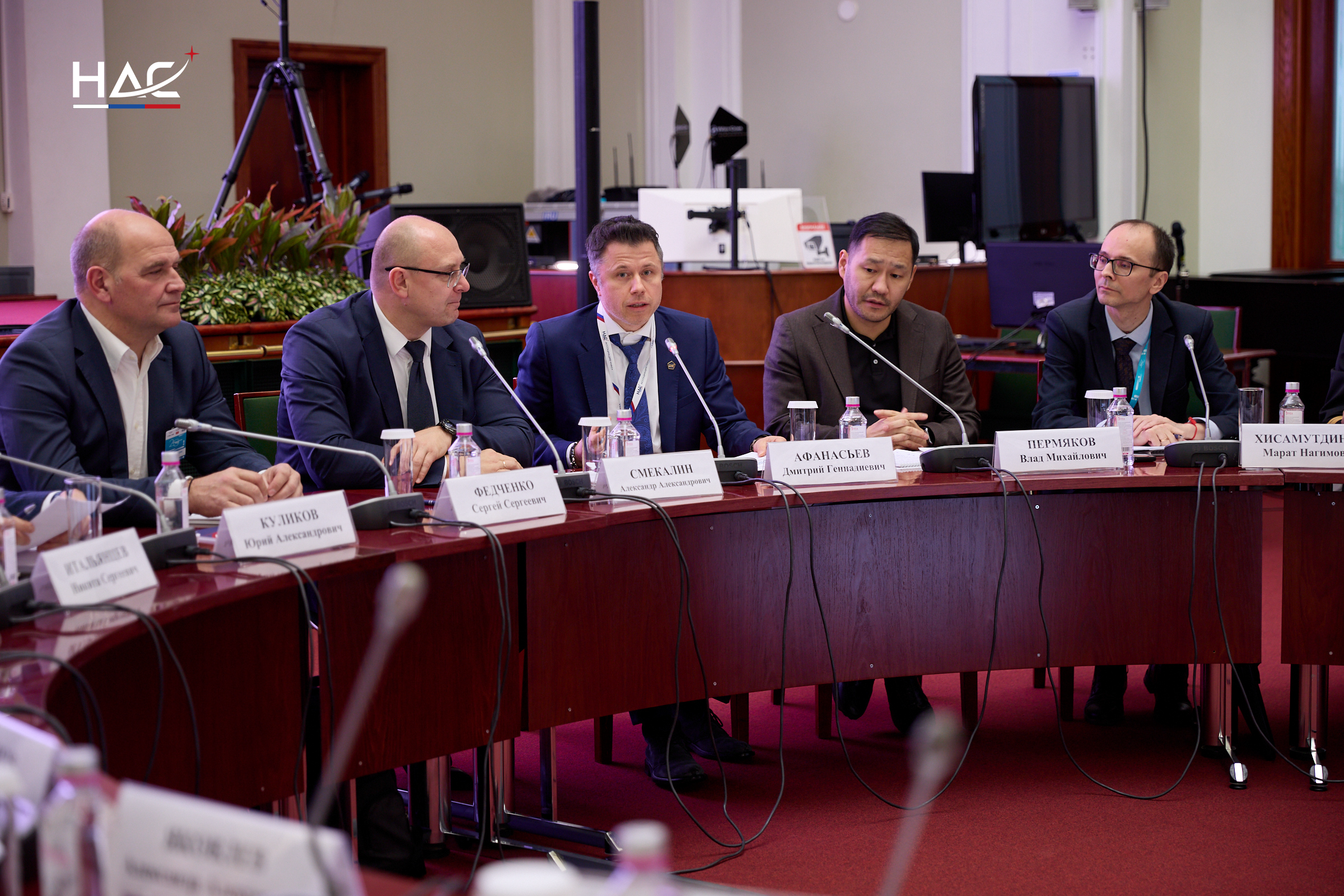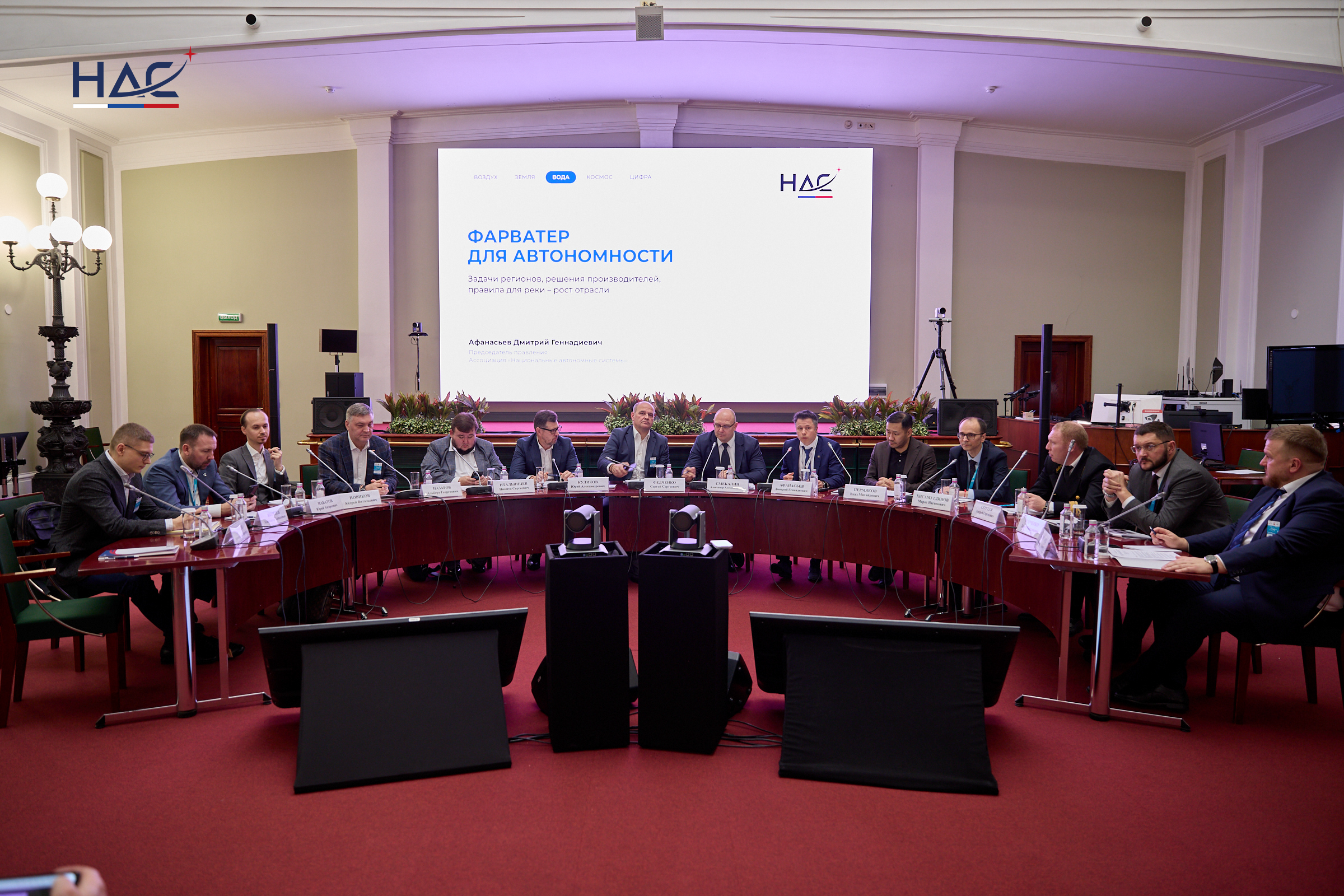
The discussion was organized by the Association of Innovative Regions of Russia (AIRR).
Russia’s inland fleet is on the threshold of a major transformation. About 65% of passenger vessels have reached the end of their service life, and the average cargo vessel is 40 years old. An unprecedented fleet renewal program, with hundreds of vessels already under contract through preferential leasing alone, offers a unique opportunity. New vessels should leave the shipyard ready to adopt autonomous technologies.
In his presentation “A Fairway for Autonomy,” Dmitry Afanasyev outlined how the NAS Association believes the transition to autonomous technologies on inland waterways can be accelerated.
💬 “Autonomous systems on rivers are already at work underwater, on the surface and from space. Uncrewed boats can cut patrol costs by up to 60%, and underwater vehicles can speed up inspections of hydraulic structures by 70%. We have the technology. Our main task now is to chart a course from successful one-off pilots to full-scale production. Coordinated demand from the regions should be the main driver of autonomy on inland waterways,” Dmitry Afanasyev said.
During the session, the NAS Association chair outlined four steps for scaling up uncrewed technologies on inland waterways.
- Draw up a common list of regional needs. These range from setting up semi-autonomous crossings to automating inland waterway service fleets. A common list would give manufacturers clear and predictable demand.
- Recognize trials across regions. Solutions successfully tested on one body of water should be eligible for deployment in other regions without bureaucratic barriers.
- Build communications infrastructure. Reliable connectivity along rivers is needed to control vessels from shore-based centers.
- Explore experimental legal regimes for water transport. The approach has been successfully tested in land transport. Adapting it to inland waterways would make it possible to test autonomous navigation and draw up rules based on operating experience.
As a joint implementer of the Russian President’s directive to develop the National Strategy for the Development of Autonomous Systems through 2036, the NAS Association is ready to offer regions and manufacturers its expertise, analysis and a forum for collaboration.