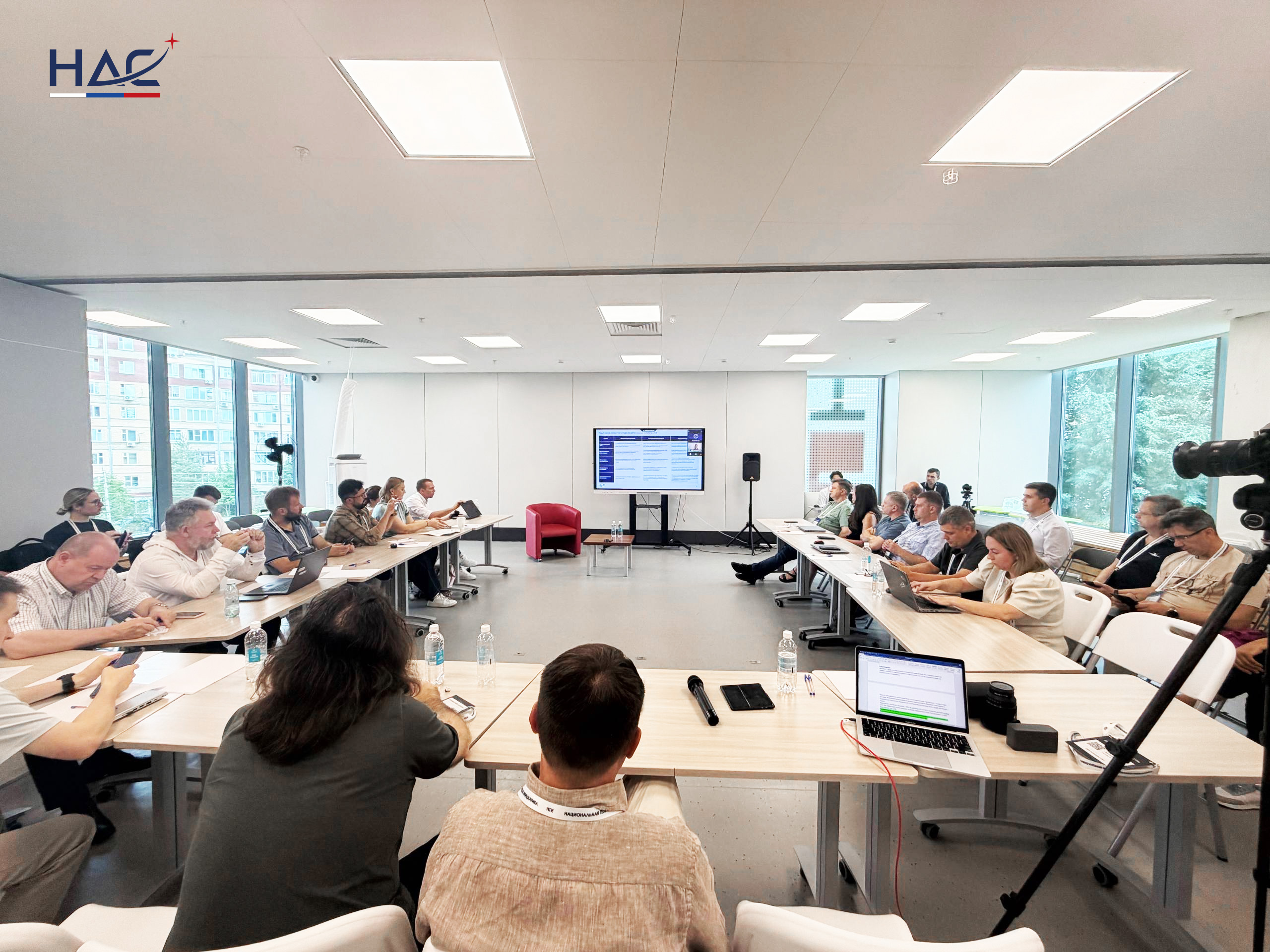
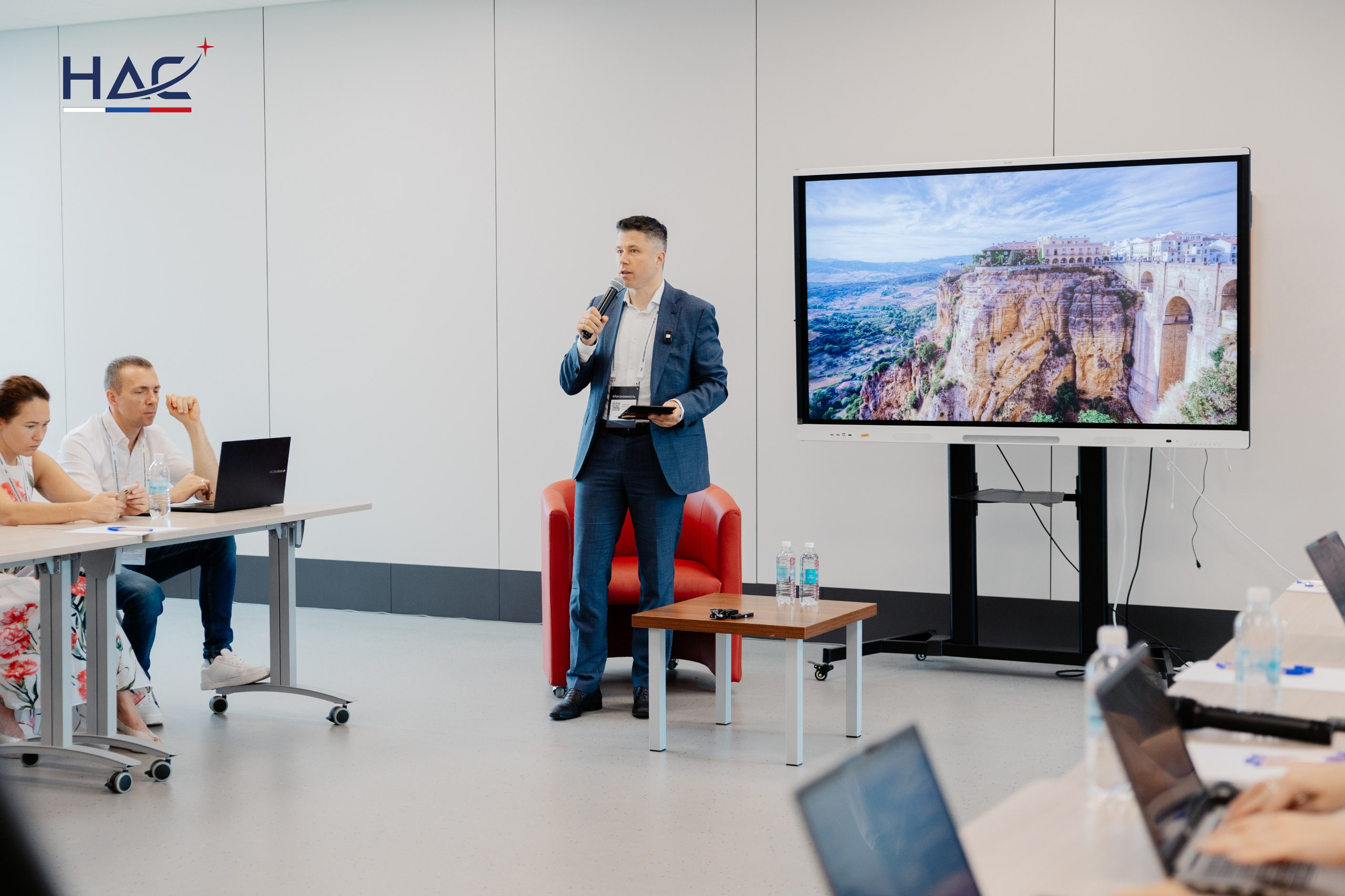
The discussion was moderated by Dmitry Afanasyev, Chairman of the Board of the NAS Association. The keynote report was delivered by Anna Manakhova, Director of the Association.
The starting point: not technology, but the country's economy
The conversation began neither with drones nor with regulation — it began with a diagnosis.
Anna Manakhova presented a tough and honest picture of the structural constraints facing the Russian economy. Between 2019 and 2025 the country's population shrank by 1.7 million people. The core working-age group of 25–49 and young people aged 15–24 lost more than 1.6 million people combined — the entire growth of the labour force came solely from older cohorts (50+). The birth rate remains below the replacement level. The effect of deferred demand has been exhausted.
The conclusion voiced from the stage was blunt: with a shrinking labour market and geopolitical turbulence, autonomous systems are not an industry priority. They are a systemic answer to the country's structural challenges.
Five domains. One market. One strategy.
The NAS Association works across five domains of application for autonomous systems: air, land, water, space and the digital environment. Today the main focus is on unmanned aircraft systems as the most mature and fastest-growing segment.
The figures speak for themselves:
• The Russian UAS market stood at 78 billion roubles in 2025 and is projected to grow to 630 billion roubles by 2030
• The robotics market — 6.4 billion roubles in 2025 and 51 billion roubles by 2030
• The expected effect of adopting AI in the Russian economy by 2030 is 7.9 to 12.8 trillion roubles
The Association's register already lists more than 166,000 unmanned aircraft with a take-off weight of 0.15 to 30 kg, 787 heavy-class aircraft and 179 UAS operators. The volume of work performed has exceeded 10.7 billion roubles.
China as a mirror: where Russia could arrive
A separate part of the report was devoted to China's experience — not as a model to copy, but as a benchmark of scale.
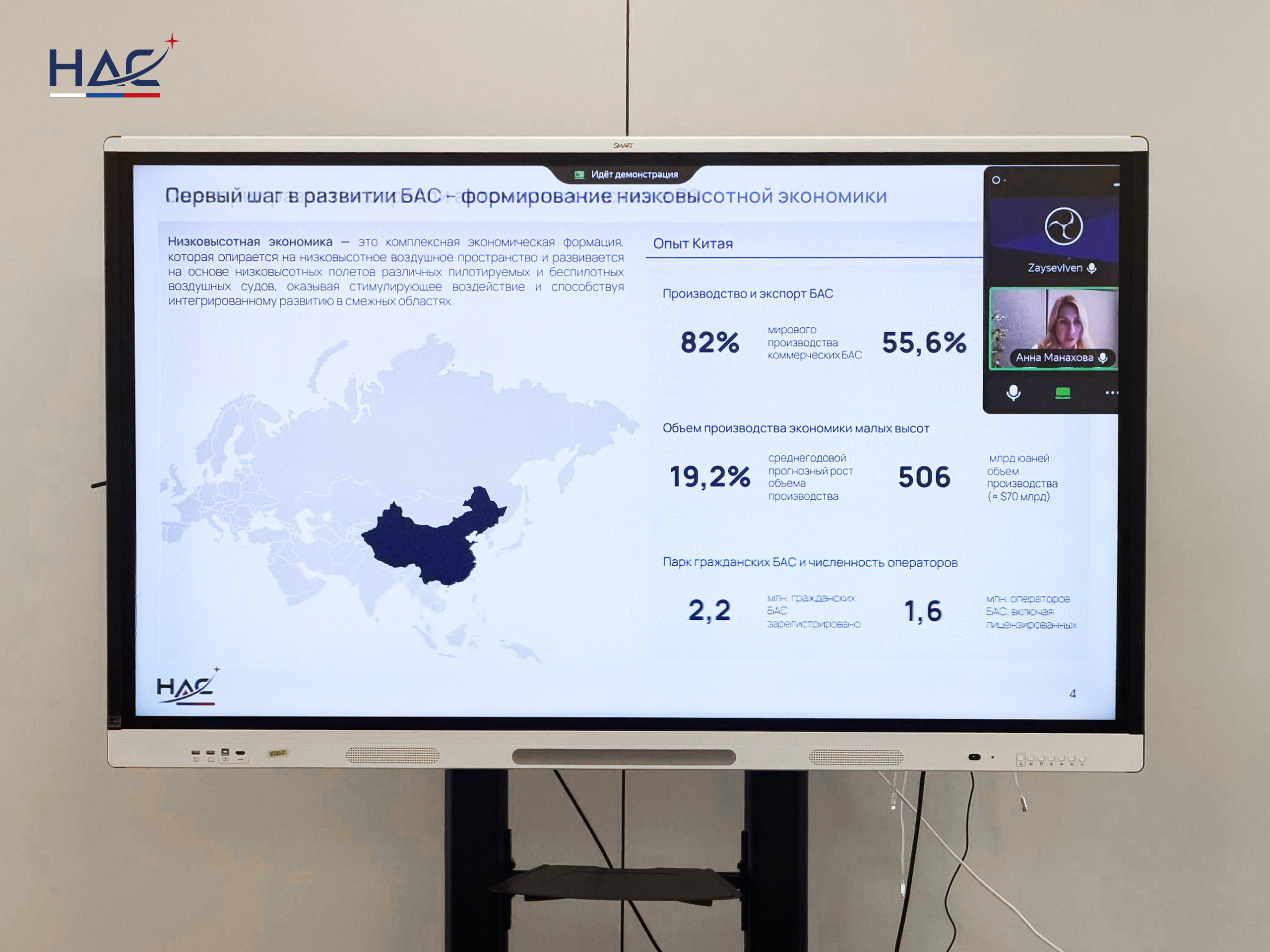
China today produces 82% of the world's commercial UAS and accounts for 55.6% of global exports. The output of its low-altitude economy is 506 billion yuan (about $70 billion), growing at an average of 19.2% a year. The country has 2.2 million registered civil unmanned aircraft and 1.6 million operators.
In China's understanding, the low-altitude economy is not merely drones. It is a complex economic formation that relies on airspace and stimulates the development of related industries. It is along this path that Russia is taking its first systemic steps.
Three scenarios: the choice is ours
Anna Manakhova presented three scenarios for the development of the autonomous systems industry in Russia.
Inertial — point adoption, catch-up import substitution, growing dependence on China. The country's vast space remains a "tax on distance".
Technological — subsidised adoption, digital platforms, autonomous trucks on selected highways, export of cybersecurity to BRICS countries.
Breakthrough — proprietary robotic platforms, fully robotised transcontinental corridors, Russia as the indispensable logistics hub of Eurasia, export of standards and platform solutions.
The third scenario is not a utopia. It is what the national strategy is being developed for.
The NAS Association at the centre of the strategy's development
Presidential Directive Pr-1758 of 11 July 2026 instructs the Government of the Russian Federation to develop a national strategy for the development of autonomous systems with the direct participation of the NAS Association.
This is not a formal mention. The Association is already doing concrete work:
• with the Government of Russia — preparing the strategy for the development of the autonomous systems industry
• with the Ministry of Transport — jointly preparing a competition on the low-altitude economy
• with the Ministry of Agriculture — a roadmap for simplifying the regulation of agricultural unmanned aircraft
• with the Ministry of Industry and Trade — a roadmap for developing exports of autonomous systems
• with the Federal UAS Centre — proposals for improving the Dronification Rating
In addition, cooperation agreements have been signed with Rosaviatsia, the Samara and Sakhalin regions, Mostransavto, GLONASS, Sakhalin State University and the Volga Region Machine Testing Station.
Outcome
The roundtable at Archipelago 2026 was not a discussion for discussion's sake. It put on record the position of the NAS Association: the autonomous systems industry is not a technological fashion but a tool for solving the country's strategic tasks. And the work of building this industry is already under way.