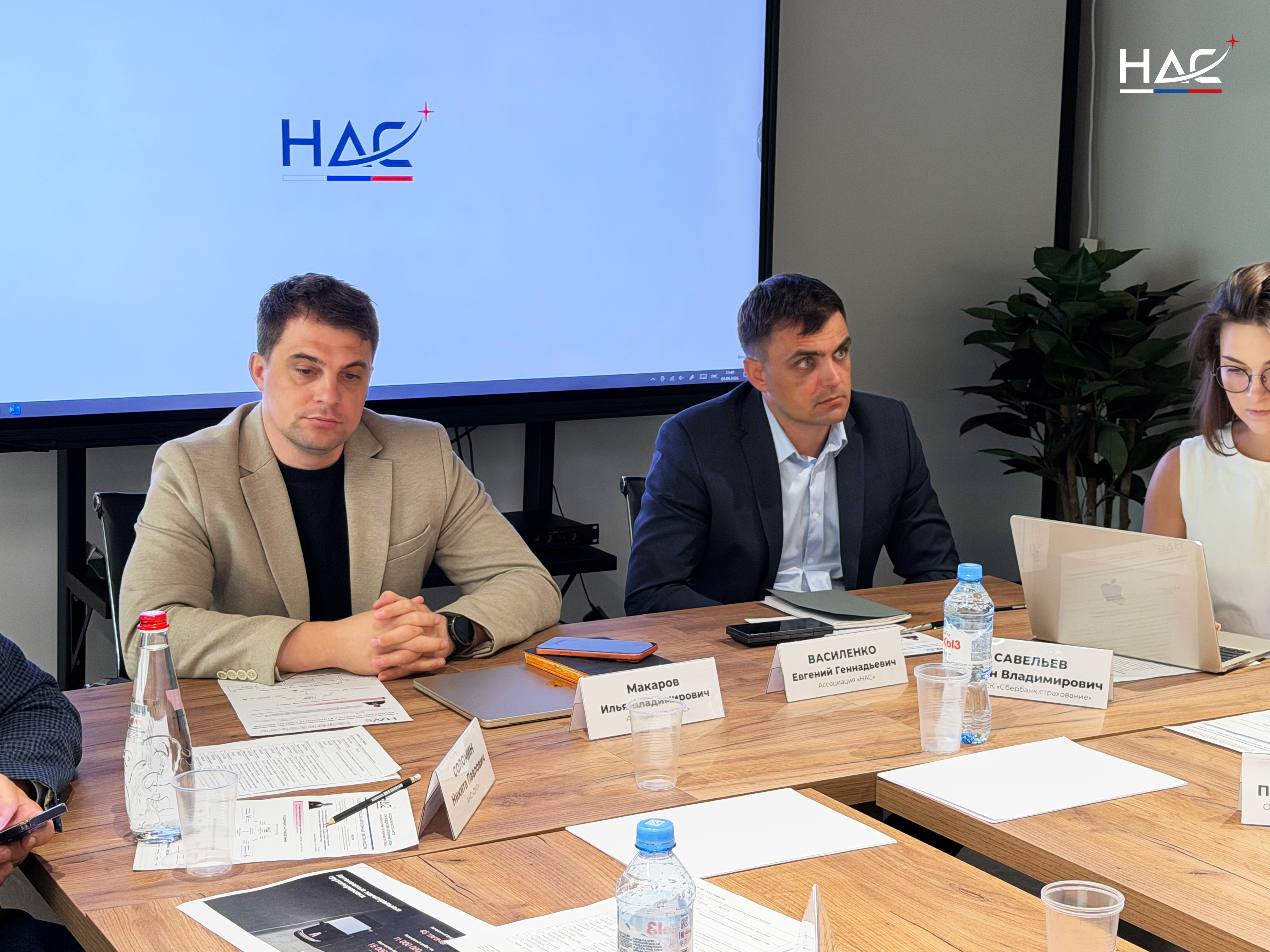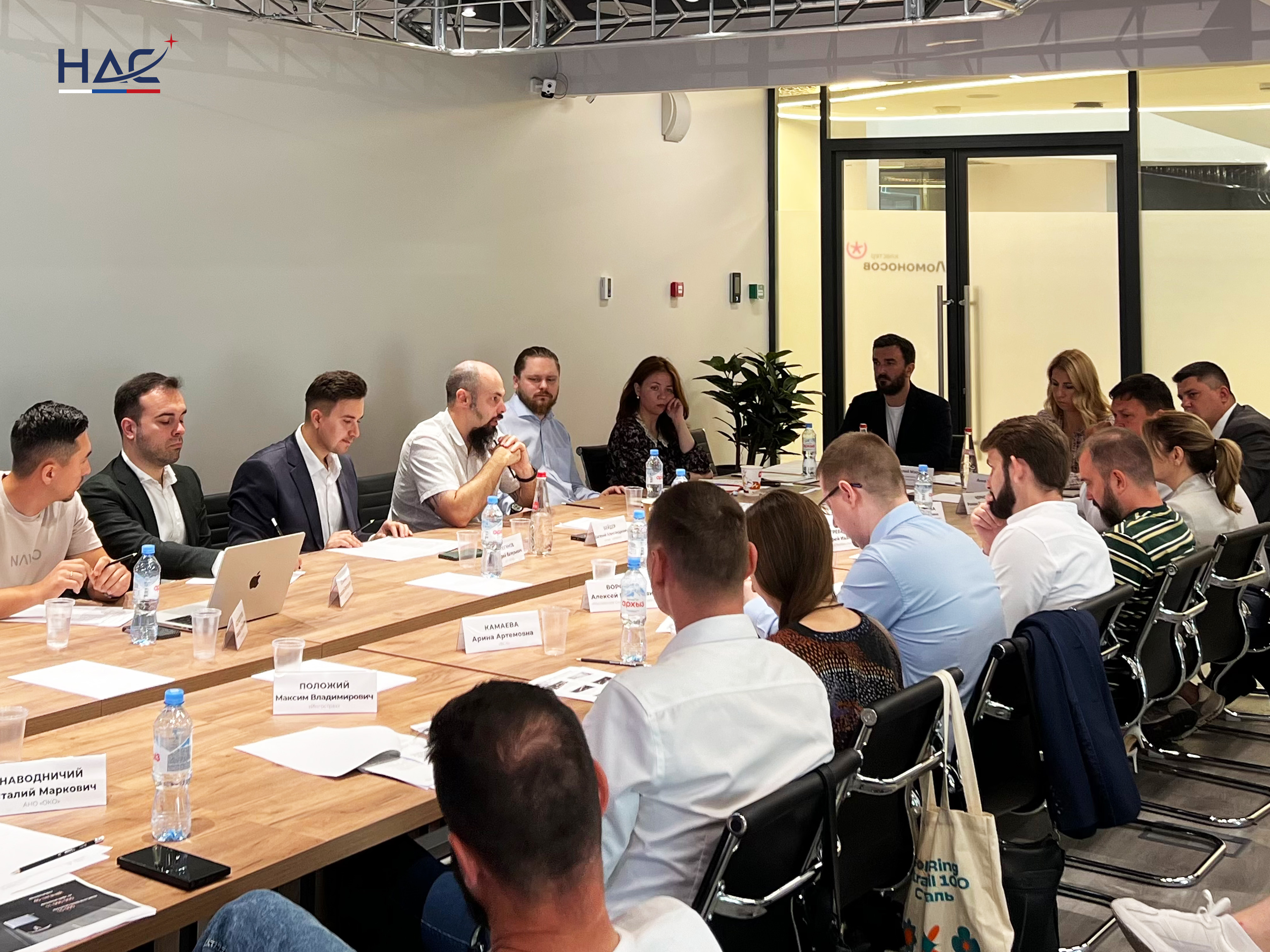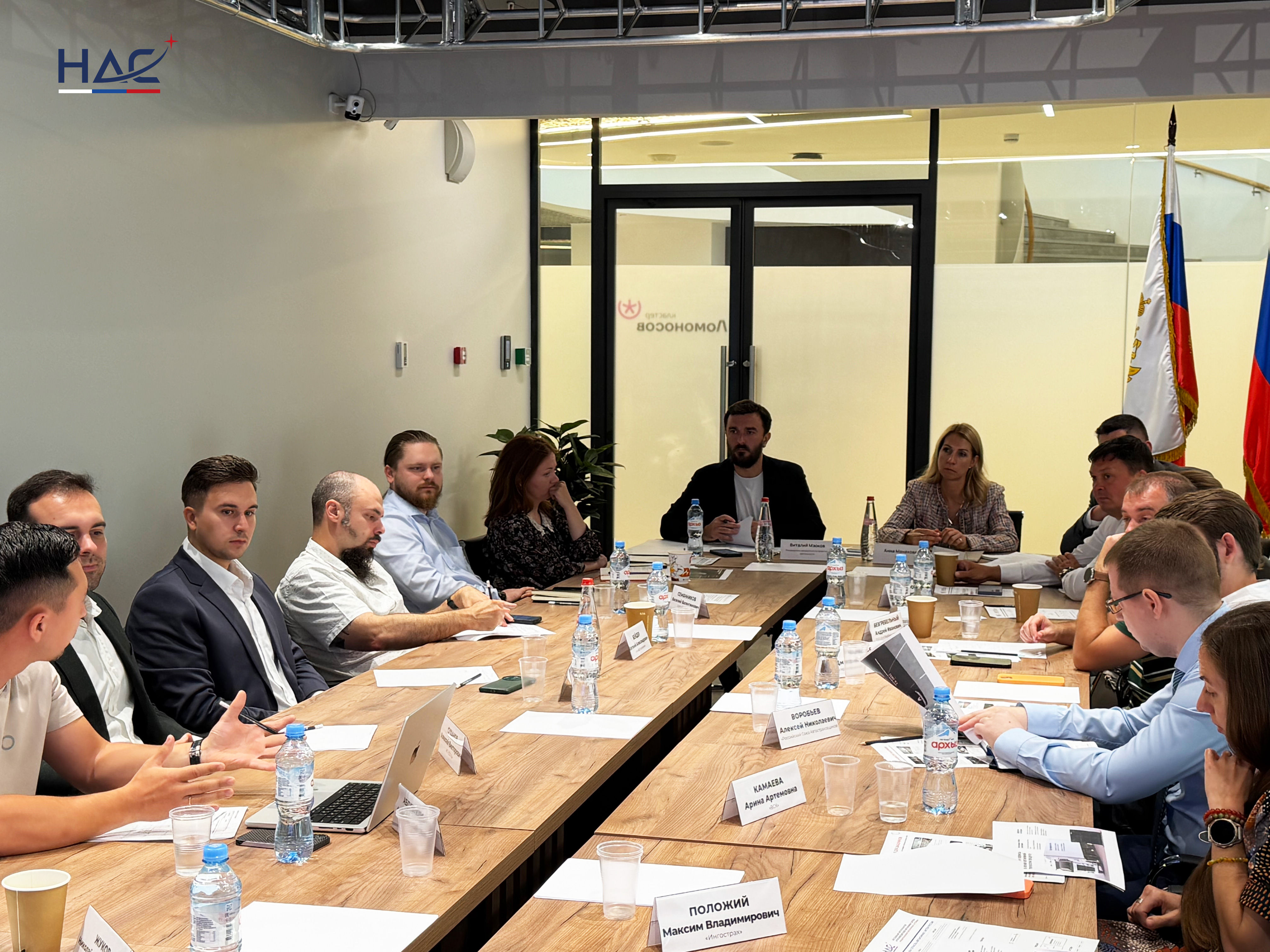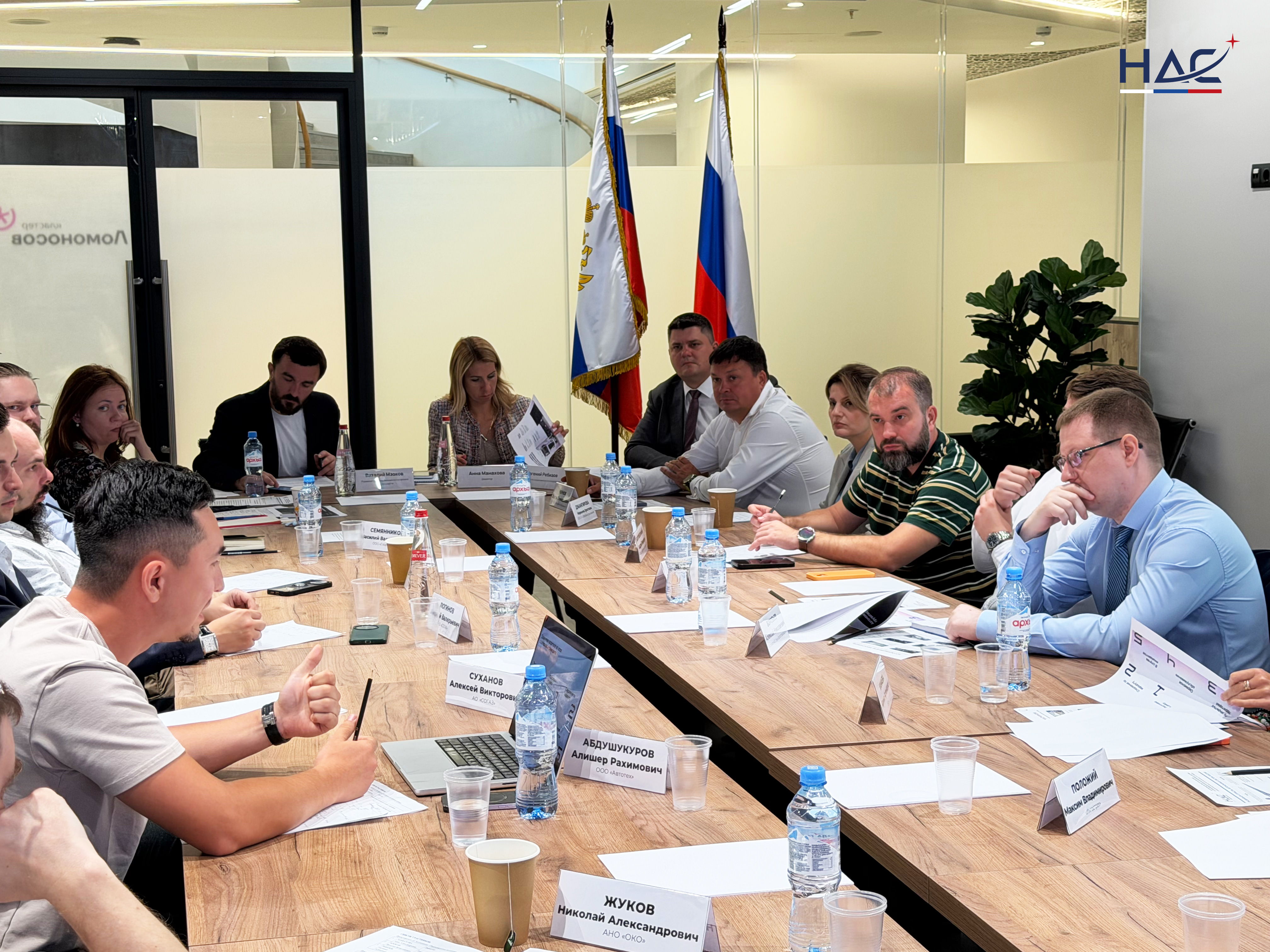
The meeting was organised by the National Autonomous Systems Association.
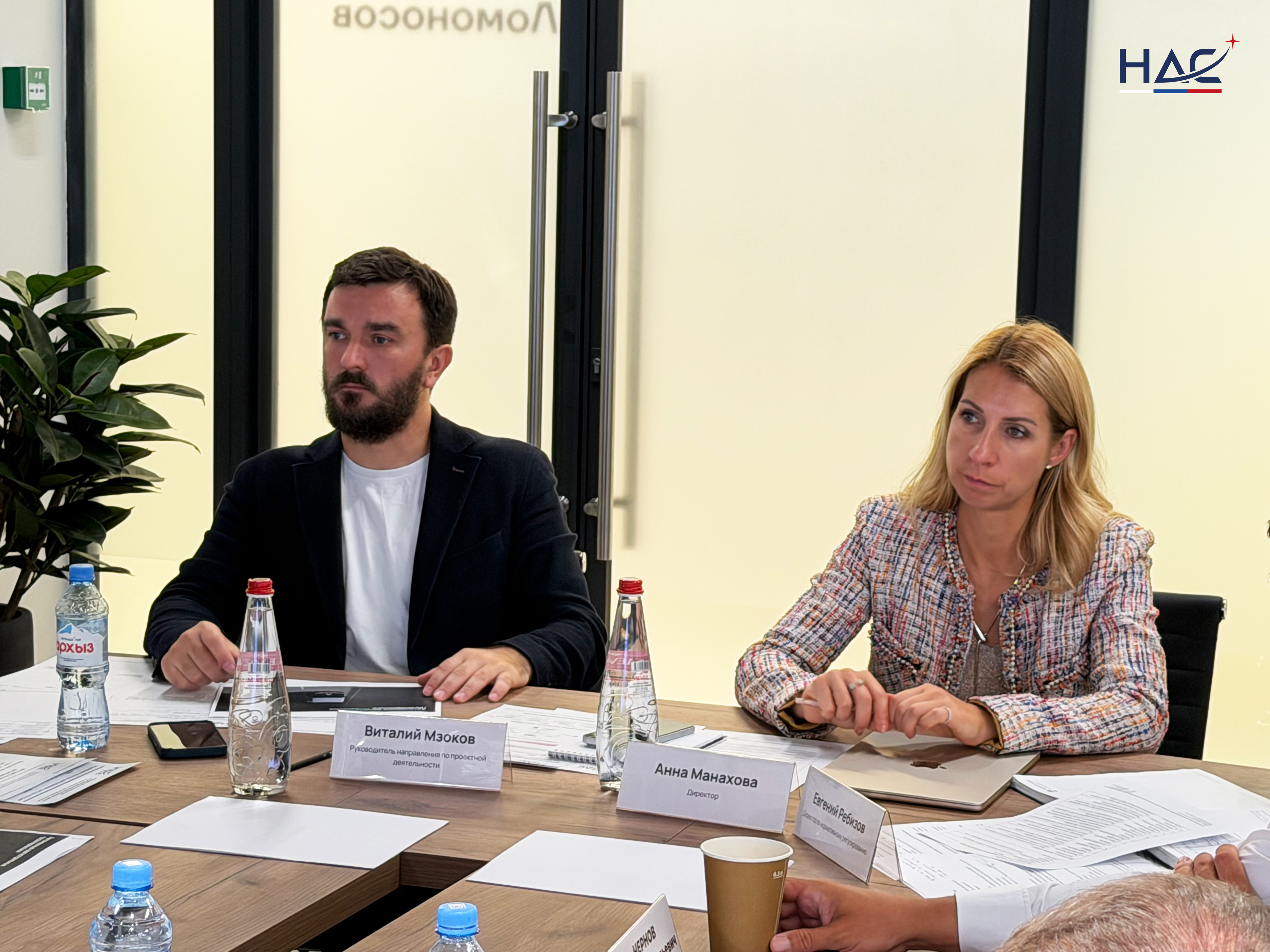
It brought together representatives of Sberbank Insurance, Ingosstrakh, AlfaStrakhovanie, SOGAZ and VSK, the All-Russian Insurance Association and the Russian Association of Motor Insurers, while the autonomous systems industry was represented by Gloria Air, Avtotech (Navio brand) and the OKO non-profit organisation. The discussion was moderated by Anna Manakhova, Director of the Association, and Vitaly Mzokov, Head of the Project Activities Department.
The participants set themselves three tasks: to identify the insurance barriers that hold back the large-scale adoption of autonomous systems, to articulate what the insurance market expects from manufacturers, operators and the regulator, and to record the questions the Association will take into its work, including as part of preparing the national strategy for the development of autonomous systems.
What operators need
Operators pointed out that the industry needs considerably more than insurance of the equipment itself. In agricultural applications, the main risk lies not in losing a drone but in the outcome of its work: an error in preparing the mixture or in the application technology can destroy the customer's harvest, and that means losses of up to 15–17 million roubles. Hence the demand for insuring the service as a whole, with a guarantee for the customer — no mass-market products of this kind exist yet.
Ground segment companies, which operate 45 autonomous tractor units commercially and have completed some 15,000 trips, are interested in covering losses caused by software faults and systemic failures — classic motor insurance does not account for such cases. In drone-based cargo delivery, insurance claim statistics have yet to accumulate, and this segment is only beginning to build up practice.
The current state of the insurance market
Liability insurance in unmanned aviation has already become a prerequisite for operating, since without a policy an operator will not have a flight plan approved. At the same time, a policy for an unmanned aircraft system is assembled from several separate products, from transport and storage insurance to aviation risks, and is most often issued as an annex to a large corporate contract. Ground robots are insured as property. Both sides identified the same, most visible gap: the market has no mass-market solutions for insuring liability for the quality of work performed.
Insurers and operators alike see the absence of accumulated statistics as the main barrier to creating such products. Telemetry and monitoring models may in future become the basis for assessing risks and calculating rates, and the industry confirmed its readiness to share this data with insurers. Until there are enough statistics, insurance companies rely on the maturity of the operator when signing a contract — on whether it has worked-out failure scenarios and well-organised processes. The participants recognised the division of products by domain of application (air, land, water, space) as a workable approach, while operators argued for a gradual move towards a single policy instead of a set of separate contracts.
"Today the insurer and the operator speak different languages: one side asks for statistics that do not yet exist, the other for a product that cannot be priced without those statistics. This circle can only be broken together. The industry is ready to share telemetry and incident data, and the Association's task is to make that data verified and fit for risk assessment. Then, instead of several disconnected contracts, a full-fledged insurance product will emerge," said Vitaly Mzokov, Head of the Project Activities Department at the NAS Association.
Independent examination of incidents became a separate topic of discussion — this request was voiced at the meeting more often than any other. Participants spoke of the need to set up a commission to investigate accidents based on flight recorder data, along the lines of established practice in manned aviation, and to define the procedure for documenting incidents involving driverless vehicles. The industry can accumulate the necessary experience and statistics within experimental legal regimes.
Outcomes of the meeting
The participants reached a shared conclusion: for the air and space domains the insurance market has standardised approaches, whereas for the land and water domains no company has them today. A proposal was made to combine the experience of several insurers and develop a standard insurance product for these domains — this work will be the subject of the next meeting.
Following the roundtable, the NAS Association is taking into its work, including as part of preparing the national strategy for the development of autonomous systems:
collecting and organising statistics and cases across all domains of application;
developing a methodology for data verification and an industry standard of trust in that data;
establishing an institution of independent examination of incidents;
agreeing with insurance companies on the list of data sufficient to develop insurance products;
sharing analytics with the All-Russian Insurance Association, the Russian Association of Motor Insurers and insurance companies.
Meetings in this format will be held regularly.